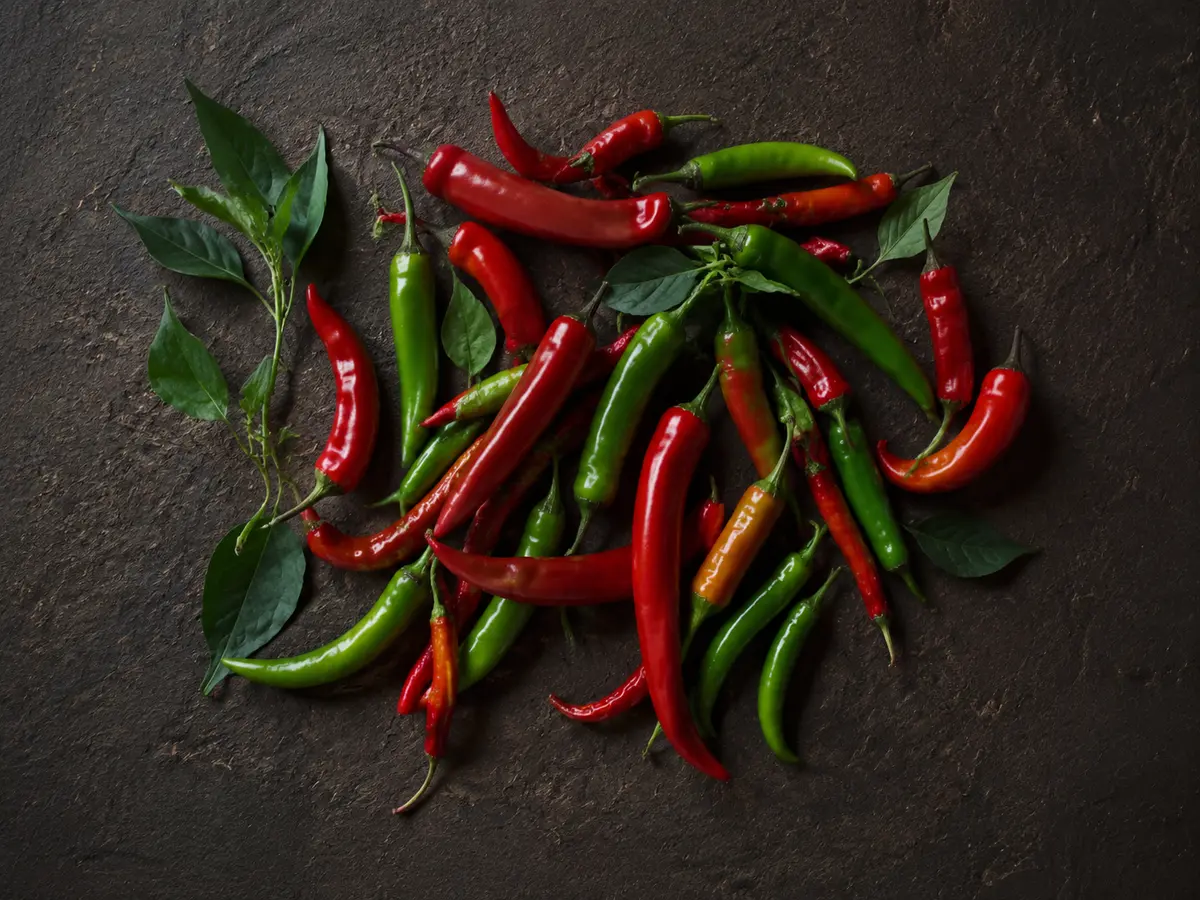
Korean chile peppers can be productive houseplants when you account for three indoor limitations: windows reduce available light, still rooms offer little pollination, and small containers change moisture quickly. Correct those conditions and your chance of a first harvest improves dramatically.
Before you begin
Seeds offer the widest cultivar choice, while a healthy transplant shortens the path to harvest. For a first attempt, choose a stocky plant with a thick stem, compact spacing between leaves, and no sticky residue or insects on the undersides.
Nine rules that prevent common failures
- Check mature plant size. The final height and spread matter more than fruit size. A dwarf or container-suitable cultivar is easier in a small room.
- Give it your brightest position. Screens, dusty glass and window direction can reduce light substantially. Small new leaves and long, leaning stems signal that supplemental lighting may be needed.
- Pot up in stages. A tiny transplant in a huge pot can sit in wet mix for too long. Move it into a final 10–15 L or larger container once roots have occupied the smaller pot.
- Use a fast-draining potting mix. An indoor mix containing an aeration material such as perlite is convenient. Garden soil may compact in a pot and bring pests indoors.
- Water the soil, not the calendar. When the top 2–3 cm feels dry and the pot is lighter, water thoroughly until a little drains out. Empty the saucer.
- Begin fertilizer gently. Let roots settle after transplanting, then start a vegetable fertilizer weaker than the full label rate. Lush leaves with few flowers can point to excessive nitrogen as well as insufficient light.
- Create gentle air movement. A small fan can strengthen stems and reduce stagnant humidity around leaves. Avoid blasting one side of the plant continuously.
- Help the flowers. Pepper flowers can self-pollinate, but indoor air is still. When flowers open, tap the stem lightly or move a soft brush from flower to flower.
- Inspect leaf undersides weekly. Aphids, spider mites and whiteflies are easier to manage early. Keep a new plant apart for observation, and isolate it promptly if pests appear.
Troubleshoot by symptom
| SYMPTOM | LIKELY CAUSE | FIRST CHECK |
|---|---|---|
| Long, leaning stems | Insufficient light | Move brighter and supplement light |
| Flowers keep dropping | Light or temperature stress; uneven moisture | Review recent changes and soil moisture |
| Lower leaves yellow | Overwatering, nutrient imbalance or age | Check drainage and root conditions first |
| Sticky or curled leaves | Possible aphids or whiteflies | Isolate and inspect both leaf surfaces |
| Dark, sunken fruit end | Physiological disorder associated with uneven moisture | Reduce swings between dry and saturated soil |
When should you harvest?
Harvest green peppers when they are firm and have reached the expected size for the cultivar. Leave them longer if you want ripe red fruit. Regular picking can encourage the plant to continue flowering. Use clean scissors rather than twisting hard enough to tear a branch.
Peppers are capable of living for several years, but overwintering indoors demands adequate light and close pest management. If space is limited or pests recur, growing it as a one-season crop and starting fresh can be sensible. Record the cultivar, sowing date and first harvest; those notes become your best guide for the next season.